Nothing Phone 3 Release Date, Nothing Phone 3 Price, Nothing Phone 3 Specs
Many smartphone manufacturers have reduced or stopped their mobile efforts in recent years. However, Nothing Technologies, a UK-based company, is still attempting to establish itself in the fiercely competitive smartphone market. Along with flashing lights and oddball designs, its instruments are targeted towards markets outside of the United States. The company's "first flagship" phone has arrived in the United States with the Nothing Phone 3.
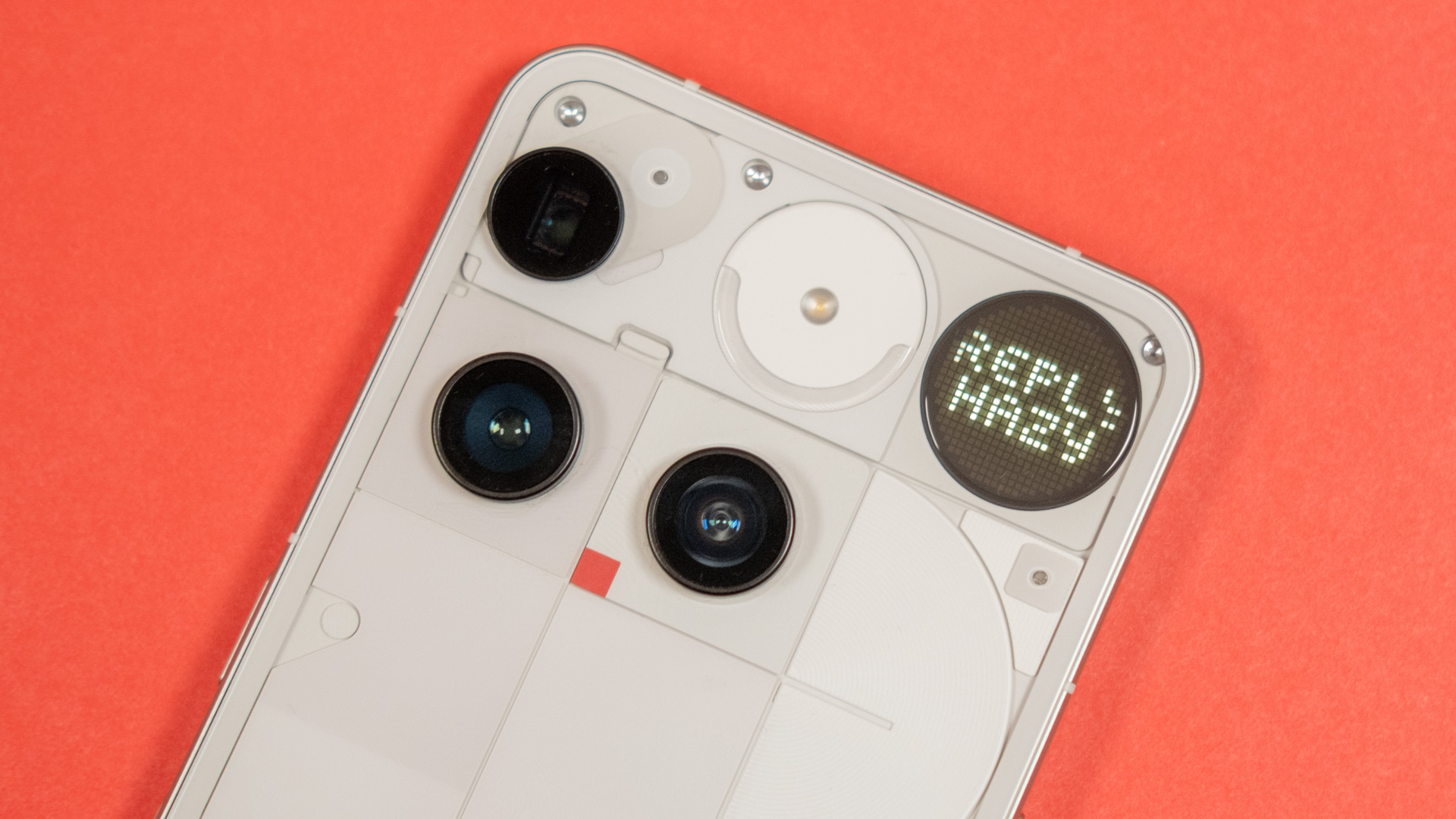
The Phone 3's specifications haven't altered, but it might compete with smartphones from Google and OnePlus. It also has that quirky design aesthetic of Nothing. It has a generic Android skin, a tiny dot matrix screen, and a transparent back. Ultimately, though, the Nothing Phone 3 isn't revolutionary.
| Specs at a glance: Nothing Phone 3 - $799 | |
|---|---|
| SoC | Snapdragon 8s Gen 4 |
| Memory | 12GB, 16GB |
| Storage | 256GB, 512GB |
| Display | 1260 x 2800 6.67" OLED, 120 Hz |
| Cameras | 50MP primary, f/1.7, OIS; 50MP ultrawide, f/2.2; 50MP 3x telephoto, f/2.7, OIS; 50MP selfie, f/2.2 |
| Software | Android 15, 5 years of OS updates |
| Battery | 5,150 mAh, 65 W wired charging, 15 W wireless charging |
| Connectivity | Wi-Fi 7, NFC, Bluetooth 6.0, sub-6 GHz 5G, USB-C 2.0 |
| Measurements | 160.6 x 75.6 x 9 mm; 218 g |
Designing Nothing
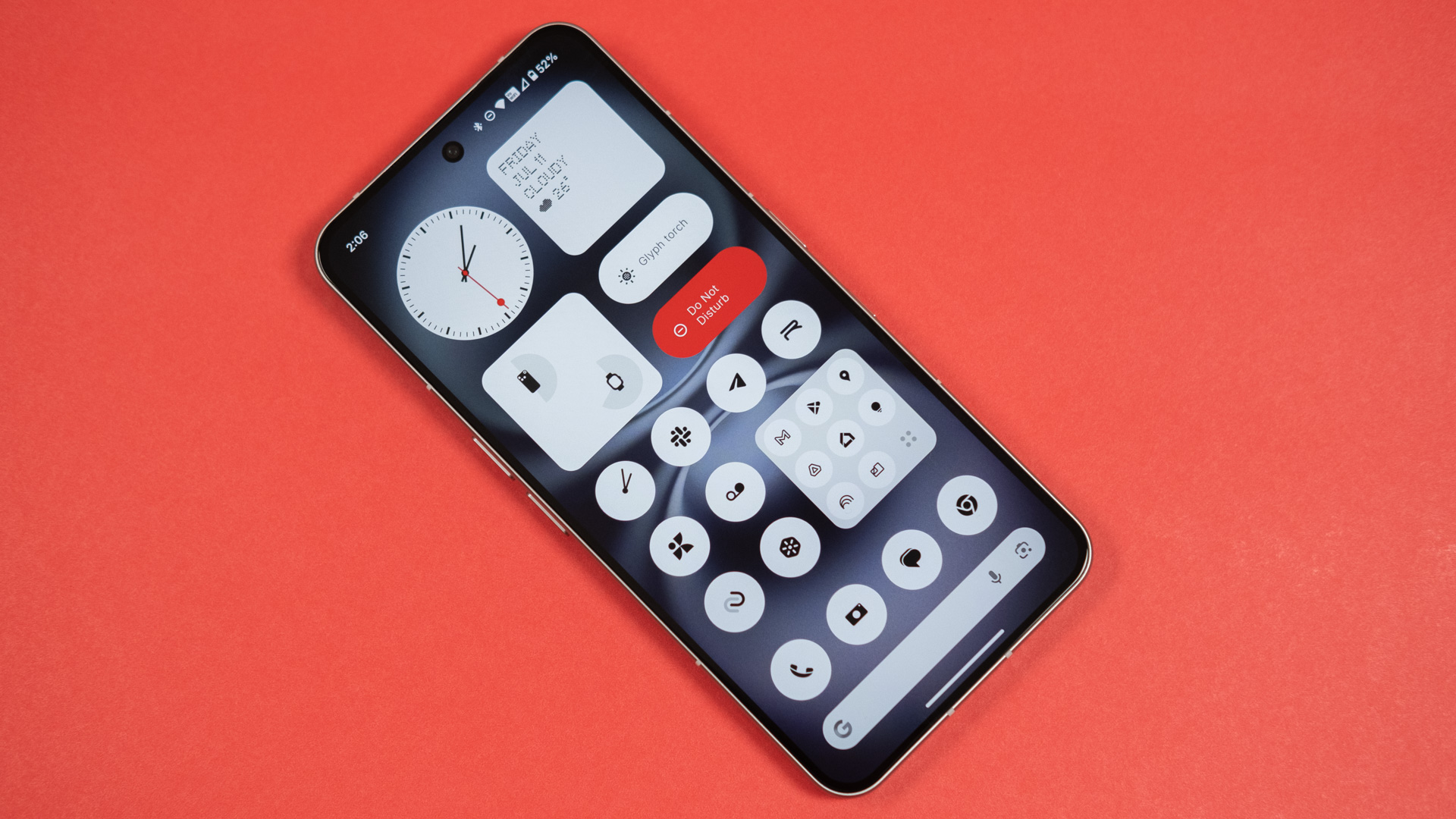
Even though the Nothing Phone 3 is said to have a distinctive design, it appears unimpressive from the outside. Around the screen, the bezels are symmetrical and thin. It features a 6.67-inch 120Hz OLED screen with a resolution of 1260 x 2800, which is protected by a sheet of Gorilla Glass 7i. In actuality, we didn't see much of a change, but it reaches 4,500 nits of brightness, which is higher than even the Google and Samsung phones. It has superb touch sensitivity, perhaps too good, as we noticed some unintentional edge touches, and it's more than bright enough to read outside.
The Nothing Phone 3 features an optical fingerprint sensor beneath the screen, just like a lot of other phones. Although it's quick and precise, it's a bit too low—just a pinky finger's width from the device's bottom. It's an extremely brilliant optical sensor, even in a dark setting. Ultrasonic fingerprint scanners on comparable Samsung and Google phones are quicker and less obtrusive.
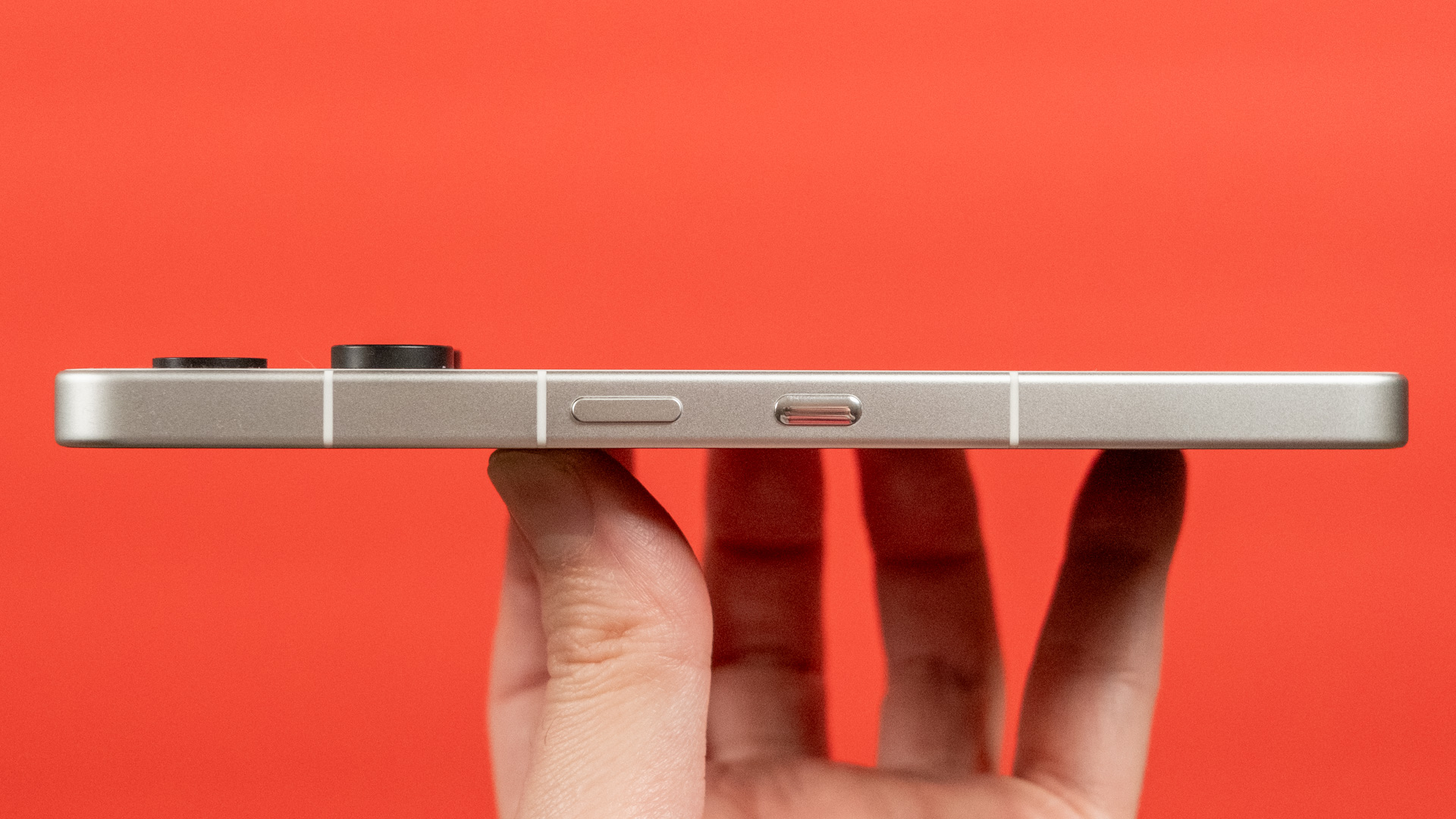
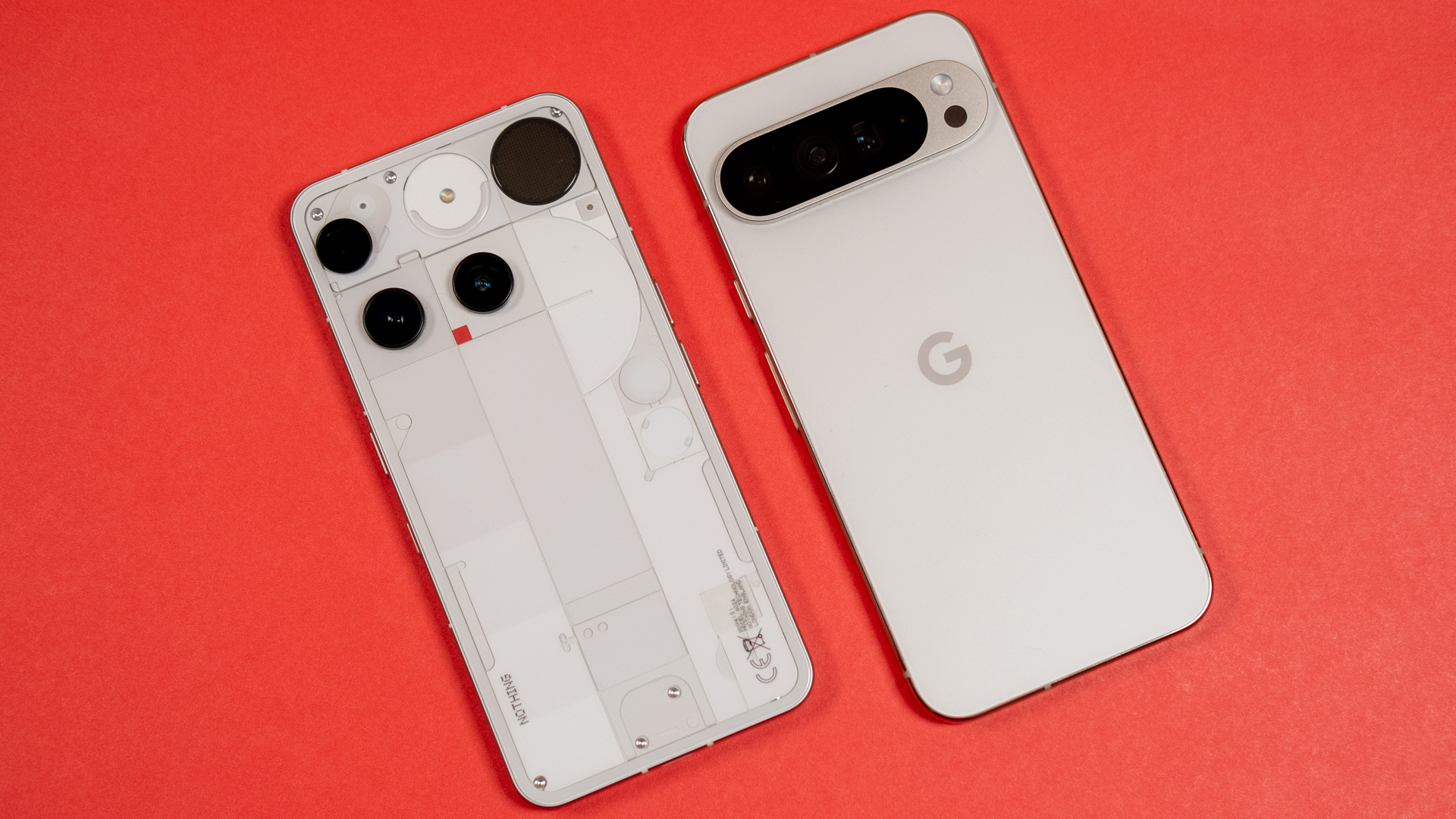
The phone's overall design is similar to that of the most recent models from Google, Apple, and Samsung, but it is the closest to the Pixel 9 series. The IP68-rated body features rounded corners and flat edges, matching the other phones' basic design. The front and rear glass panels merge in perfectly with the aluminum frame's curved shape. Because of its matte appearance, it feels a little sticky to the touch. Although we admire the effort, the case feels quite cheap and is likely to discolor after a few months of use. Nothing arrives in the box with a clear case.
Nothing resembling an IR blaster or headphone jack will be seen. The power and volume buttons have no noticeable movement and are tactile, flat, and extremely stable. The Essential Key, a convex button beneath the power button, connects to Nothing's on-device AI capabilities (more on that later). Although button enthusiasts would enjoy this, it is quite easy to press by mistake when picking up the phone. Furthermore, the button cannot be remapped to do any other function.
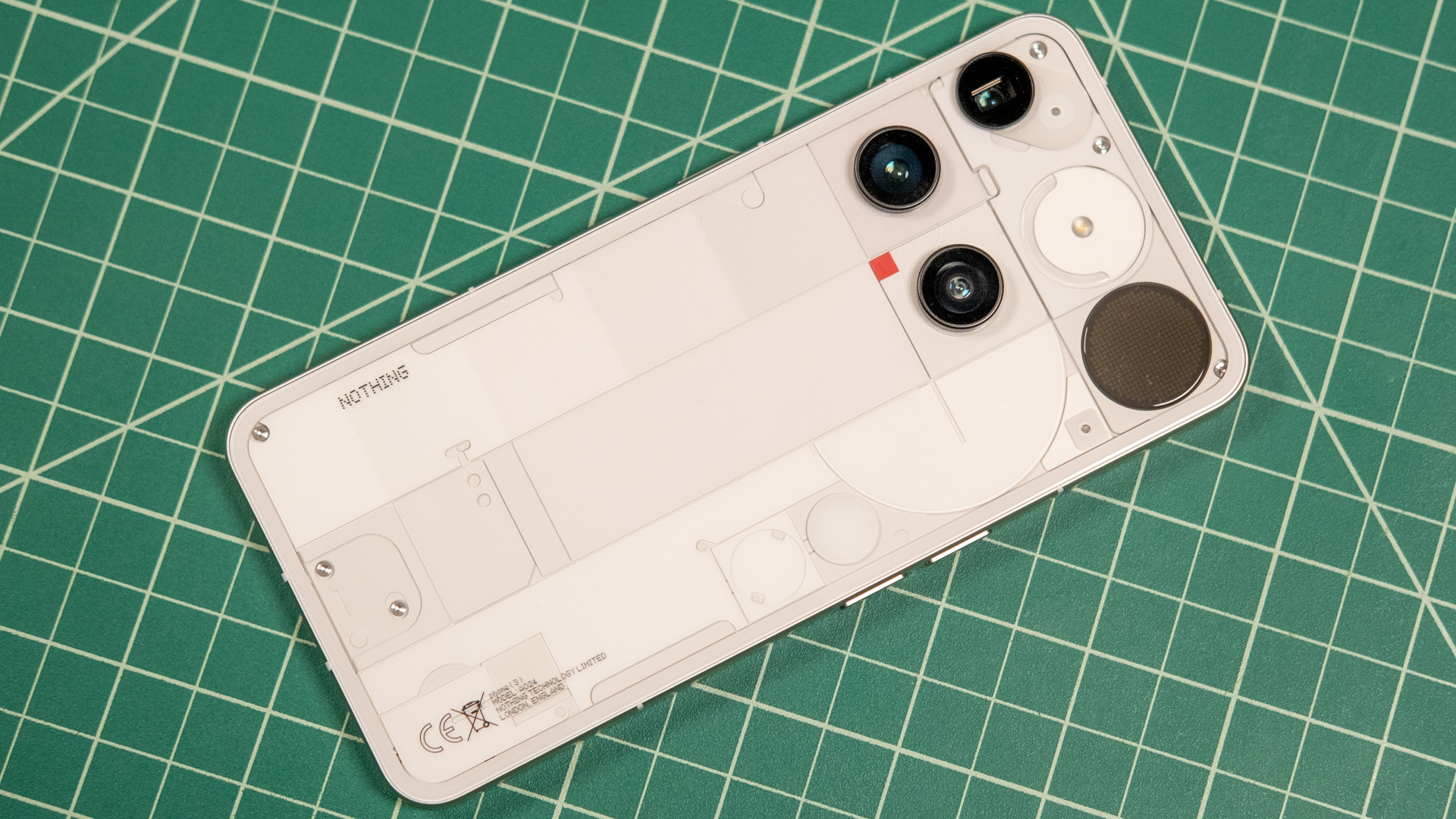
The Nothing Phone 3 doesn't truly stand out until you reach the back. The phone's internal components are hidden behind a transparent screen of extra-strong Gorilla Glass Vectras on the rear. The panels underneath the glass have slightly diverse colours and textures, which have been chosen to produce an intriguing visual impact. It's definitely visually appealing, but whether you like it or not depends on your personal preferences. Unexpectedly, the camera sensors are arranged at the top, straight out of the "Glyph Matrix."
Nothing has replaced the Glyph light bars on its earlier phones with the monochromatic Glyph Matrix. Some of the display options, such as the clock and power meter, can be helpful at times, and can be switched by pressing a pressure-sensitive button behind the glass. A Magic 8-ball, a low-fidelity mirror, and a Rock, Paper, Scissors simulator are examples of less practical "Glyph toys." Additionally, it can show call and status alerts, such as when you have a missed call or when Do Not Disturb is turned on. To utilise the entire display, you can also turn the phone over.
There are toys that are irritating because they just have one button and 489 LEDs. For instance, it is incredibly challenging to take a picture with the selfie mirror, and you have to long-press to stop the stopwatch, which negates its function. Playing with the glyph dot matrix is entertaining, but it's merely a ploy. How much time do you actually spend staring at your phone's back? Even if the display is visually appealing, checking the time or playing rock, paper, scissors won't affect the game.
Outstanding performance
Although it lacks Qualcomm's flagship mobile chip, it does not claim to be a flagship phone. The slightly more affordable Snapdragon 8s Gen 4 is unrelated to the Snapdragon 8 Elite, which is found in the majority of high-end devices today. It has a slower GPU and eight ARM reference cores in place of the Orion CPU cores.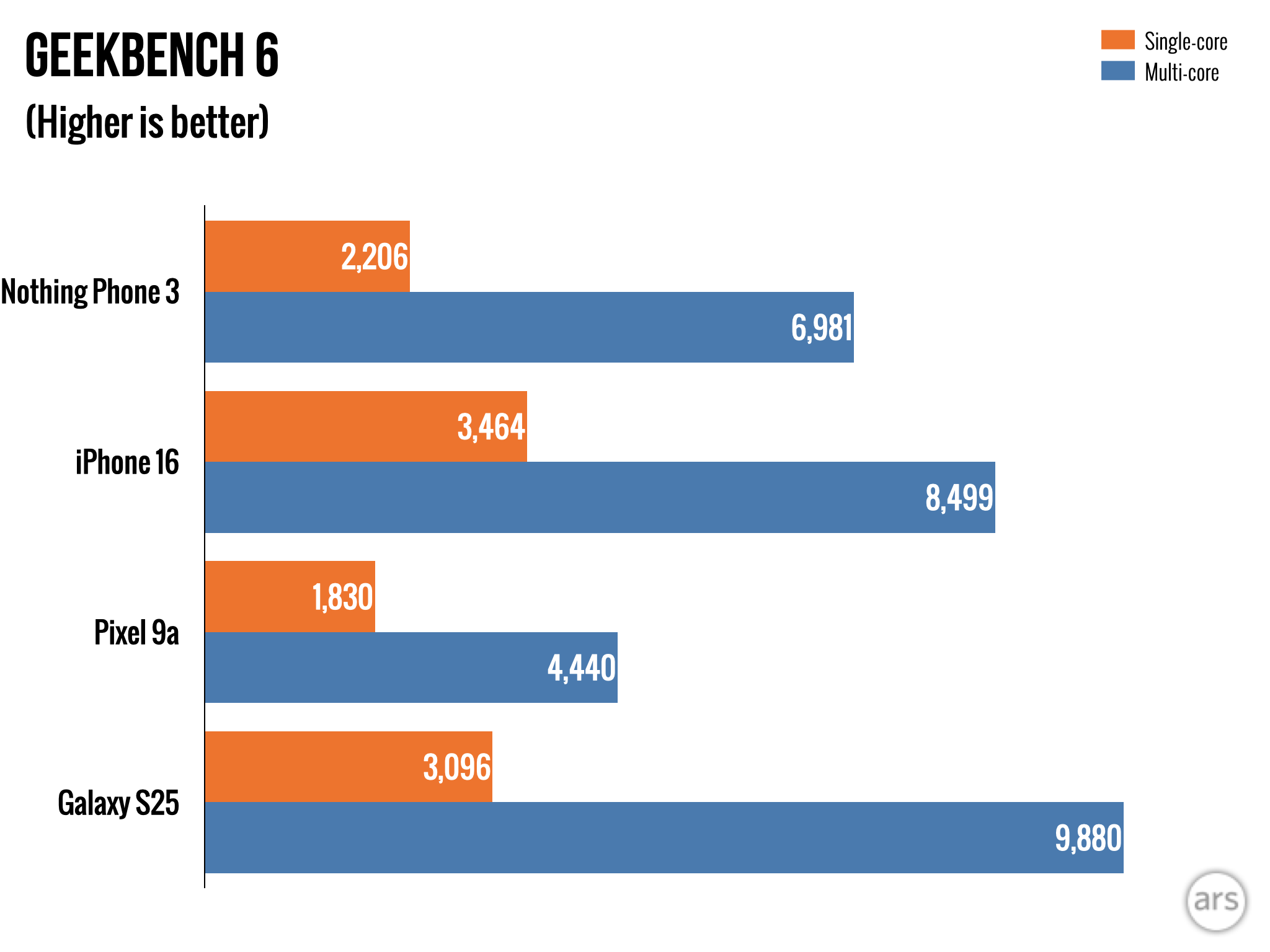
What impact does this have on performance and speed? The Nothing Phone 3 isn't a slouch, but it also can't match the benchmarks of high-end devices like the Galaxy S25. The Snapdragon 8s Gen 4 actually outperforms Google's most recent Tensor chip, which is used in the Pixel 9 series.
The ordinary Arm cores, as anticipated, fall roughly 40% short of Qualcomm's top processor in Geek bench compared to the bespoke Orion CPUs. The Adreno 825 in the Nothing Phone 3 is quite comparable to the 830 found in Snapdragon 8 Elite phones, hence the graphics difference is significantly less.
Thus, if you're playing a highly graphically demanding game, you might experience greater gaming performance with a phone like the Galaxy S25 than the Nothing Phone 3. We found it difficult to detect any fidelity reduction on the Nothing Phone 3, even when using these devices side by side. However, compared to the most recent Pixels, it does perform noticeably better in high-end games.
At high temperatures, the Phone 3 only loses 25 to 30 percent of its performance, which is fairly good under stress. Uncomfortably warm, the phone's body is preferable to the processor overheating.
Nothing Geekbench.
The user experience is not negatively impacted by this small decline in CPU performance benchmarks. The Nothing Phone 3 is incredibly speedy; it opens apps instantly and multitasks without latency. Additionally, the animations are as polished as Google.
This phone has a 5,150 mAh battery, which is even somewhat bigger than the Galaxy S25 Ultra's 5,000 mAh battery. The phone has a long battery life and may easily last the entire day without experiencing any limit troubles. However, it won't survive for a second day on a single charge. You should plug the Nothing Phone 3 in every night, just like you would with a Pixel or Galaxy phone.
However, you are not required to keep your charger for the night. Compared to Google, Samsung, and Apple phones, the Nothing Phone 3's 65W cable charging is far faster. You can acquire enough energy to get you out of there if the battery goes low by connecting it to practically any USB-PD charger for a few minutes. Additionally, you get 15W wireless charging; however, the magnetic Qi 2 standard is not supported.
There is no sign that AT&T is completely supportive, and we had no issues utilising the Phone 3 on T-Mobile. However, Verizon is not officially supported. It may be difficult to activate the phone as a new device on Verizon's network, even though it possesses all the required sub-6GHz 5G bands.
Upgraded Cameras
The Phone 3 has a good array of sensors, so you'll get some good pictures. The camera improvement was essential to making this a "flagship" phone. However, not all of them will be beneficial.
There are four 50MP sensors on the rear of the Nothing Phone 3, including a wide-angle, a 3x telephoto, and an ultra-wide. Additionally, it has a 50MP front-facing selfie camera. Smartphone camera sensors are made with pixel binning in mind, even though you can shoot in 50MP mode. In order to enhance and brighten its 12.5MP photos, the phone uses merged pixel components.
The dynamic range of the Nothing is sufficiently good that you don't have to worry about an excessively bright or dull background ruining the shot, and we found that the colour balance and exposure were pretty true to reality.
Sharp details can be captured by the Nothing Phone 3's cameras, however some photos appear "muddy" and over-processed. But there is a lot of shutter lag, which is the main problem. The phone seems to be processing and stacking photos too slowly. Therefore, a moving subject may appear blurry even when taken outside and with a fast shutter speed.
A youngster or pet that is really active is difficult to photograph clearly. Shutter lag increases in low light conditions, making it more challenging to get a sharp picture. Almost often, images taken in night mode are a touch fuzzy.
Generally speaking, still subject photos are good, and the ultra-wide camera can provide some nice images. The camera includes focussing for macro images, and landscapes look particularly good. You must be aware that this mode exists because it does not switch on by itself when you enter an indoor environment. But it's important to keep in mind.
A periscope-style lens, often seen on sensors with 5x or higher zoom ratios, is used by the telephoto sensor. It will get you a little bit closer to your subject without cropping because it is just 3x, but don't anticipate the same quality as a Pixel or Samsung phone.
We would rank the Nothing Phone 3's photography experience on par with Motorola's in its sub-flagship pricing category. The Nothing Phone 3 is adequate unless mobile photography is your main priority, however devices like the One Plus 13R or Pixel 9a will capture superior images.
Excellent software with an AI button added
The Z Fold 7 and Z Flip 7 will be the first new phones to come out with Google's most recent operating system later this month, and nothing will surpass Samsung when it comes to Android 16. Although an Android 16 update is anticipated shortly, Nothing is currently releasing its phones running Android 15 and Nothing OS 3.5. However, there isn't much to be thrilled about with the initial release of Android 16, and Nothing OS is actually rather nice in the interim.
Nearly every UI piece is unchanged on Android, which is a certain way to get Samsung's typical amount of clutter. But throughout the encounter, nothing maintains its basic aesthetic. The program has some helpful home screen choices and widgets, the icon layout is appealing and consistent, and none of the built-in apps are compatible. Additionally, nothing has improved Android's useful features, such as a quick settings panel that is completely customizable and a quicker method for deleting recent apps.
A few little issues have come up, such as a weather widget that refuses to show units of freedom and a somewhat difficult back gesture. In addition, Nothing's Android skin stands apart from other OEM themes. Nothing OS's "dot matrix" aesthetic may not appeal to everyone, but it's one of the more well-thought-out Android skins we've seen.

This smartphone has an AI component, just like all the others from 2025. Nothing compares to the Essential Space tool, which is connected to the previously stated Essential Key. You can add notes to the screenshot that is taken when you press the button. To extract crucial information, it plugs into Essential Space and unleashes AI on it. It can generate reminders and to-do lists based on pictures, but it doesn't appear to recall them as often as it gets hit. Additionally, there isn't a search feature like the Google Pixel Screenshots app, which appears to be an error. A voice memo that goes through a similar AI process can be recorded by holding down Essential Space.
Essential Space has several privacy restrictions as well. Nothing indicates that it won't keep any of the data, even though the screenshots you save are sent to a distant site for processing. Although the instrument processes your voice notes, it would be convenient if the photographs were also included.
Though it's not as appealing as what we've seen from Google, everything has a good notion for using mobile AI. Furthermore, Google's usage of AI isn't really necessary for the mobile experience. Standard Gemini integration is also included with the Nothing Phone 3, and Google's chatbot is likely to occupy more space than is necessary.
Nothing has guaranteed two more years of security patches after five years of significant Android version releases. However, nothing is a brand-new business, and there's no assurance that it will be in seven years. Assuming all goes according to plan, it's a good update strategy that outperforms Motorola and OnePlus but falls short of Google and Samsung, who both provide seven years of complete update support.
Different but not that different.
Probably the nicest piece of hardware the firm has produced in its brief existence, the Nothing Phone 3 is a decent smartphone. The hardware is sleek but sturdy and visually appealing, the software is well-designed, and the performance is quick. This isn't the phone for you if you like a more unique appearance or intend to cover your phone with the toughest case available.
Nothing's Glyph Matrix is entertaining to play with, but you'll eventually write it off using the phone. Before the novelty wears off, you can only play so many rounds of rock, paper, scissors. Xiaomi has placed full LCDs on the backs of several of its handsets, and Asus has a dot matrix on its ROG gaming phones, so it's not the only company taking this approach. When OEMs experimented with secondary ticker displays and e-paper screens on the back, it wasn't all that different. Nor were they really helpful.
It did nothing to improve the secondary display's aesthetics, but even if it were a brilliant idea, having a screen on the back of your phone would be useless. The phone's transparent appearance and dot matrix screen make it stand out from the competition, but not in a revolutionary way. Like the majority of 2025 smartphones, it is still a fairly mediocre glass sandwich device.
The Nothing Phone 3, which costs $799, is in competition with gadgets like the OnePlus 13 and Pixel 9, both of which it outperforms in terms of camera quality and speed. Google, meanwhile, offers superior update support. There aren't many complaints about Nothing OS, so if you purchase the Nothing Phone 3, it should be because you truly enjoy the design of the hardware and software. Otherwise, for the same or less money, there are better possibilities.
People Also Searching:
nothing phone 3 release date
nothing phone 3 price
nothing phone 3 specs
nothing phone 3 glyph matrix
nothing phone 3 leaks
nothing phone 3 launch
nothing phone 3a pro review
nothing phone 3 benchmark results
nothing phone 3 camera details confirmed
nothing phone 3 reddit
nothing phone 3 amazon
nothing phone 3 att
nothing phone 3 announcement
nothing phone 3a pro case
nothing phone 3a case
nothing phone 3 antutu score
nothing phone 3 a review
amazon nothing phone 3
about nothing phone 3
antutu score of nothing phone 3
nothing phone 3 and 2025 plans
nothing phone 3 price in saudi arabia
a nothing phone 3a pro
will there be a nothing phone 3
https://www.aitechgadget.com/2025/07/many-smartphone-manufacturers-have.html



0 Comments