Meta AI training case, Meta AI copyright case, Book authors Meta lawsuit
Before long after a point of interest administering regarded that when Human-centered replicated books to prepare fake insights models, it was a "transformative" reasonable utilize, another judge has arrived at the same conclusion in a case setting book creators against Meta.
But that doesn't essentially cruel the judges are totally in understanding, which might before long ended up a issue for not fair Meta, but other enormous AI companies celebrating the match of wins this week.
On Wednesday, Judge Vince Chhabria clarified that he sided with Meta, in spite of his way better judgment, primarily since the creators made all the off-base contentions in their case against Meta. "This administering does not stand for the recommendation that Meta€™s utilize of copyrighted materials to prepare its dialect models is legal," Chhabria composed.
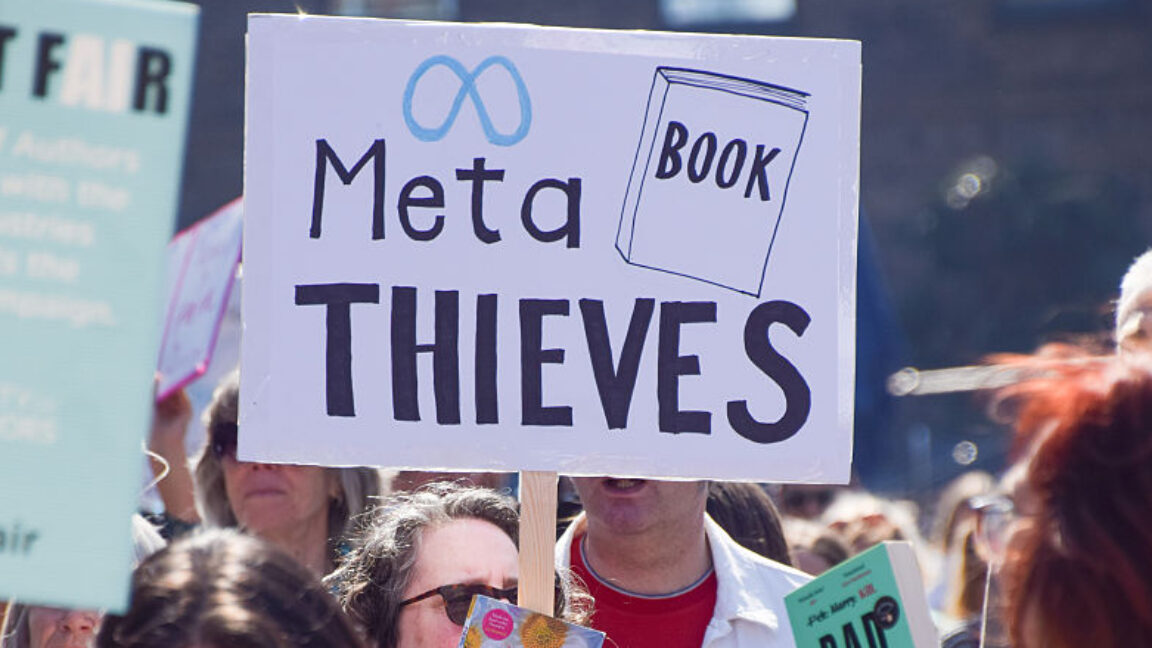
It stands as it were for the suggestion that these offended parties made the off-base contentions and fizzled to create a record in support of the correct one."
Instead of contend that Meta's Llama AI models gambled quickly flooding their markets with competing AI-generated books that might in a roundabout way hurt deals, creators lethally only argued "that clients of Llama can replicate content from their books, which Meta€™s replicating hurt the advertise for permitting copyrighted materials to companies for AI preparing."
Since Chhabria found both of these hypotheses "flawed"—the previous since Llama cannot deliver long passages of works, indeed with antagonistic inciting, and the last mentioned since creators are not entitled to monopolize the showcase for authorizing books for AI training€”he said he had no choice but to give Meta's ask for rundown judgment.
Eventually, since creators presented no prove that Meta's AI debilitated to weaken their markets, Chhabria ruled that Meta did sufficient to overcome authors' other contentions with respect to charged hurts by essentially giving "its claim master declaration clarifying that Llama 3’s discharge did not have any perceivable impact on the plaintiffs€™ deals."
Chhabria appeared to criticize creators for raising a "half-heated" defense of their works, noticing that his conclusion "may be in critical pressure with reality," where it seems "conceivable, indeed likely, that Llama will hurt the book deal showcase."
There's maybe a silver lining for other book creators in this administering, Zachariah recommended. Since Meta's ask for rundown judgment came some time recently course certification within the claim, his administering as it were applies to the 13 creators who sued Meta in this specific case. Meaning that other creators who maybe might make a more grounded case charging market harms could still have a solid chance at winning a future Meta claim, Chhabria composed.
"In cases including employments like Meta’s, it appears just like the offended parties will often win, at slightest where those cases have better-developed records on the showcase impacts of the defendant’s utilize," Chhabria composed.
No matter how transformative [AI] preparing may be, it’s difficult to suppose that it can be reasonable utilize to utilize copyrighted books to create a instrument to create billions or trillions of dollars whereas empowering the creation of a possibly perpetual stream of competing works that might altogether hurt the showcase for those books."
Encourage, Zachariah proposed that "a few cases might show indeed more grounded contentions against reasonable use"—such as news organizations suing OpenAI over supposedly encroaching ChatGPT outputs that may in a roundabout way compete with their websites.
Celebrating the administering, a legal counselor speaking to The Modern York Times in that suit, Ian Crosby, told Ars that both Charisma's and Alsup's decisions are seen as reinforcing the NYT's case. "These two choices appear what we have long contended: generative AI designers may not construct items by replicating stolen news substance, especially where that substance is taken by wrongful implies and their items yield substitutive substance that debilitates the showcase for unique, human-made news coverage," Crosby said.
On the other hand, Zachariah composed that AI companies may have an less demanding time defeating copyright claims on the off chance that the feared showcase weakening could be a trade-off for a clear open advantage, like progressing non-commercial inquire about into national security or pharmaceutical.
Zachariah said that in the event that the authors had presented any prove of advertise weakening, Meta would not have won at this arrange of the case and would have likely confronted broader disclosure in a class-action suit weighed by a jury.
Instep, the as it were surviving claim in this case concerns Meta's disputable tormenting of books to prepare Llama, which creators have so distant effectively affirmed may have damaged copyright laws by disseminating their works as portion of the tormenting handle. Preparing AI isn't associated to instructing “schoolchildren€
Agreeing to Chhabria, in case rights holders give prove of advertise weakening, which will raise the most grounded resistance most likely to win AI copyright battles. So, whereas Meta actually won this battle against these book creators, the administering isn't essentially a pummel dunk for Meta, nor does it offer plentiful security for any AI company.
Instead of recommend that AI companies can vanquish copyright claims on the ideals that their items are "transformative" employments of authors' works, Chhabria said that cases will win or lose based on affirmations of showcase harm.
He claimed that the "upshot" of his administering is that he did not make any bright-line rules carving out exemptions for AI companies. Instep, he accepts that his administering makes it clear "that in numerous circumstances it'll be unlawful to duplicate copyright-protected works to prepare generative AI models without consent.
Which implies that the companies, to avoid risk for copyright encroachment, will generally got to pay copyright holders for the correct to utilize their materials."
In his arrange, Chhabria called out Judge William Alsup for centering his administering this week within the Human-centered case "intensely on the transformative nature of generative AI whereas brushing aside concerns approximately the hurt it can deliver on the showcase for the works it gets prepared on."
Chhabria especially did not favor that Alsop compared authors' complaints of the conceivable advertise hurts that may result in the event that Anthropic's Claude overflowed book markets to the shocking thought that instructing "schoolchildren to compose well" would "result in an blast of competing works.
Concurring to Judge Alsup, this 'is not the kind of competitive or imaginative relocation that concerns the Copyright Act,'" Chhabria composed. "
But when it comes to advertise impacts, utilizing books to instruct children to compose isn't remotely like utilizing books to make a item that a single individual could utilize to generate countless competing works with a miniscule [sic] division of the time and imagination it would something else take. "This inapt similarity isn't a premise for blowing off the foremost critical figure within the reasonable utilize examination," Chhabria cautioned.
Moreover, Meta's claim that giving creators a win would halt AI development "in its tracks" is "silly," Chhabria composed, noticing that in case rights holders win in any of the claims against AI companies nowadays, the as it were result would be that AI companies would got to pay authors€”or else depend on materials within the open space and demonstrate that it's not fundamental to utilize copyrighted works for AI preparing after all.
These items are anticipated to produce billions, indeed trillions, of dollars for the companies that are creating them," Chhabria composed. "In case utilizing copyrighted works to prepare the models is as vital as the companies say, they will figure out a way to compensate copyright holders for it." Three ways creators can keep battling AI preparing This week's decisions recommend that the address of whether AI preparing is transformative has been to a great extent settled.
But as creators proceed suing AI companies, with the most recent claim heaved at Microsoft this week, Chhabria proposed that "for the most part the plaintiff€™s as it were chance to vanquish reasonable utilize will be to win definitively on" the fourth figure of a reasonable utilize investigation, where judges and juries weigh "the impact of the utilize upon the potential showcase for or esteem of the copyrighted work.
Chhabria proposed that creators had at slightest three ways to battle AI preparing on the premise of showcase hurts. To begin with, they seem claim that AI yields "disgorge their works." Moment, they seem "point to the showcase for permitting their works for AI preparing and fight that unauthorized copying for preparing hurts that showcase (or blocks the advancement of that showcase)." And third, they could contend that AI yields might "by implication substitute" their works by creating "substantially similar" works.
Since the first two contentions fizzled within the Meta case, Chhabria considers "the third contention is distant more promising" for authors intending to choose up the burn where the 13 creators within the current case have fizzled. An curiously wrinkle which will have ceased creators from conjuring advertise weakening as a risk within the Meta case is that Chhabria famous that Meta had contended that "advertise weakening does not number beneath the fourth figure."
But Chhabria clarified "that can€™t be right." "Backhanded substitution is still substitution," Chhabria composed. "On the off chance that somebody bought a sentiment novel composed by [a expansive dialect show (LLM)] rather than a sentiment novel composed by a human author, the LLM- generated novel is substituting for the human-written one."
Apparently, the same would go for AI-generated non-fiction books, he suggested. So whereas "it’s genuine that, in numerous copyright cases, this concept of advertise weakening or circuitous substitution isn't especially critical," AI cases may alter the copyright scene because it "involves a innovation that can create truly millions of auxiliary works, with a minuscule [sic] division of the time and imagination utilized to form the first works it was prepared on," Chhabria composed.
This is often unprecedented, Chhabria recommended, as no other utilize "has anything close the potential to surge the market with competing works the way that LLM preparing does. And so the concept of advertise weakening gets to be exceedingly pertinent...
Courts can’t adhere their heads in the sand to an self-evident way that a unused innovation might extremely hurt the motivation to form, fair since the issue has not come up some time recently." In a way, Chhabria's administering gives a guide for rights holders looking to progress claims against AI companies within the middle of precedent-setting decisions.
Shockingly for book creators suing Meta who found a thoughtful judge in Chhabria—but as it were made a "brief reference" to roundabout substitution in a single report in its filings ahead of yesterday's ruling€”"courts can’t choose cases based on what they think will or ought to happen in other cases."
On the off chance that their affirmations were fair a small more grounded, Chhabria proposed they seem have indeed won on rundown judgment, rather than Meta.
Without a doubt, it appears likely that advertise weakening will frequently cause offended parties to conclusively win the fourth factor€”and in this way win the reasonable utilize address overall—in cases like this," Chhabria composed.
Tags:
Meta AI training case
AI training lawsuit
Meta AI copyright case
Book authors Meta lawsuit
AI training legal dispute
Copyright infringement AI training
Meta AI legal battle
Judge ruling Meta AI case
Book authors' arguments AI case
AI data usage in training
Meta AI copyright challenges
Legal implications of AI training
Meta AI model lawsuit
Book authors suing Meta AI
AI training and intellectual property
AI and copyright law
Meta AI data sources controversy
Meta lawsuit book authors
Meta AI fairness in training
Court decision Meta AI case
https://www.aitechgadget.com/2025/06/meta-ai-training-case-meta-ai-copyright.html



0 Comments