Rocket Update: Significant reuse achievements in Asia, and Vandenberg turns into SpaceX's western hub.
Honda takes to the skies with its hopper. An experimental reusable rocket built by Honda's research team launched on Tuesday, reaching nearly 900 feet (275 meters) before landing accurately at the company's test facility in northern Japan, according to Ars. The hopper marks the first successful prototype rocket flight outside the United States and China, showcasing vertical takeoff and landing technology essential for developing a reusable launch vehicle.An impressive achievement.
Honda has remained low-key about this rocket initiative since a brief media spotlight almost four years ago. Created by Honda R&D Company, the rocket ascended from a platform at the company’s testing area in the southeastern part of Hokkaido, Japan's northernmost major island, and landed within less than a meter of its intended target. 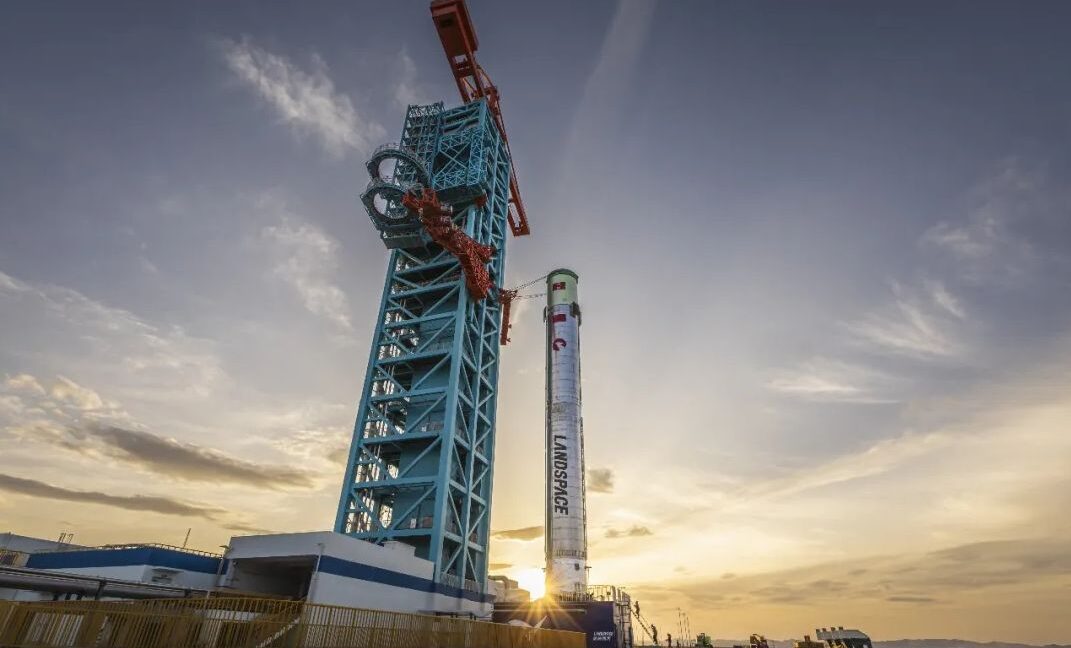
Honda noted that its launch vehicle is "still in the fundamental research phase," and has yet to decide on commercializing the rocket program. (submitted by Fernwaerme, TFargo04, Biokleen,
Rendgrish, and astromog)European launch firms ask for support. Arianespace and Avio released a joint statement on Monday urging that European missions utilize European rockets, as reported by European Spaceflight. The statement emphasized that without "ongoing support," European rocket manufacturers might fall behind the institutionally backed competitors from the US.Aiming to ensure European priority... "Leading space nations maintain their industries through stable and secure institutional markets, which facilitates long-term investments, innovation, and the preservation of leadership,"
the statement clarified. The two companies claim that Europe is in danger of lagging, not because of a lack of technical skill, but due to fundamental market weaknesses. (submitted by EllPeaTea)Growing launch frequency may impact the ozone layer. According to a study in Nature, the increasing number of rocket launches might hinder the ozone layer’s recovery. Although the ozone layer is
healing as countries phase out CFCs, continuous growth in the space industry could slow this process, as reported by Radio New Zealand. "Currently, it’s not a major issue because launches are infrequent," said Laura Revell, an atmospheric scientist at the University of Canterbury and study co-author. "However, with more frequent launches, driven by companies with ambitious plans,
this could become a serious concern."Projecting substantial launch growth... "In a conservative estimation of around 900 launches a year, there could be some ozone loss, but not significant," stated Revell. "Yet, in a more aggressive scenario with up to 2,000 launches a year, we observed concerning ozone loss levels in regards to recovery," she mentioned. The study attributes ozone losses to chlorine from solid rocket propellant and black carbon released by most propellants. (submitted by Zaphod)
It seems that soon, the FAA might implement a pay-to-play system for space activities. According to Ars, the Federal Aviation Administration is considering charging fees to companies that want to obtain licenses for launching and reentering spacecraft.
This effort aims to provide the FAA with the necessary funds to keep up with the fast-expanding commercial space sector. A budget reconciliation bill, presented earlier this month by Senator Ted Cruz (R-Texas), proposes that the FAA's Office of Commercial Space Transportation, known as AST, will initiate licensing fees next year.The stakes are rising for participants.
Over the next eight years, these fees will gradually be introduced; after that, the FAA plans to modify them to align with inflation. These funds will contribute to a trust fund designated to help cover the operational expenses of the FAA's commercial space office.
The reconciliation bill section introduced by Cruz proposes that the FAA will charge commercial space firms a fee based on the weight of their payload, starting at 25 cents per pound in 2026 and increasing to $1.50 per pound by 2033. Future fee adjustments will vary according to inflation. Additionally, the total fee for each launch or entry will be limited to $30,000 in 2026, rising to $200,000 by 2033, with subsequent adjustments for inflation.Landspace advances its Zhuque-3 rocket testing.
On Friday, the Chinese launch company Landspace achieved a significant milestone by conducting a static fire test as it prepares for an orbital launch of its Zhuque-3 rocket, as reported by Space News. During this test, the rocket's nine methane-liquid oxygen engines were ignited sequentially and ran for 45 seconds, including tests for gimbal control, before shutting down as expected.
This successful test establishes a strong basis for the upcoming first flight of the Zhuque-3 and advances the country's reusable launch vehicle technology, according to Landspace.Structurally resembling Falcon 9... The static fire test utilized a first stage that matches the one meant for Zhuque-3’s upcoming inaugural flight, which is scheduled for later this year.
The test encompassed the complete ground-based launch preparation and ignition sequence, including propellant loading, tank pressurization, staged engine ignition, steady-state operation, and a programmed shutdown. When fully expendable, the rocket will be able to transport 21 metric tons to low Earth orbit, or up to 18,300 kg if the first stage is recovered. Alternatively, it can carry 12,500 kg to LEO when it returns to the original launch site.
Kuiper launch postponed because of equipment problems. After a scrub on Monday afternoon, United Launch Alliance and Amazon must delay the second launch of the Project Kuiper satellites. "The Atlas 5 551 rocket, intended to carry Amazon’s Kuiper 2 mission, is now on hold due to an engineering observation of high purge temperatures in the booster engine," stated ULA. "The team will inspect the equipment, and a new launch date will be shared when it’s ready.
Back to the VIF in a spiff On Tuesday, the Atlas V rocket was brought back to its Vertical Integration Facility by ULA to fix a problem with the nitrogen purge line on the vehicle. Besides this mission, ULA has received orders for six more Atlas 5 rockets from Amazon for satellite launches in its constellation. As of Friday morning, ULA had yet to announce a new date for the Kuiper 2 mission, but it may happen early next week. (submitted by ElllPeaTea)Varda's upcoming launch will utilize its own spacecraft. Varda Space Industries is getting ready to launch its fourth spacecraft, W-4, on a SpaceX rideshare mission set to start as early as June 21 from Vandenberg
Space Force Base in California, according to Space News. The startup, based in Los Angeles, creates pharmaceuticals in space and brings them back to Earth using special reentry capsules.Transitioning away from Rocket Lab... Varda collaborated with Rocket Lab on the Photon spacecraft for its first three missions to conduct operations in space. However, with W-4, Varda
Is introducing its very first spacecraft completely made in-house. The firm aims to streamline design and production internally to reduce the time between missions and enhance the ability to customize vehicles based on client needs. Varda concluded that vertical integration was vital for expanding its operations. (submitted by MarkW98)Vandenberg becomes SpaceX’s western hub. A key moment early in SpaceX's journey occurred in 2005 when the company was essentially removed from Vandenberg Space Force Base after its initial successful test of the Falcon 1 rocket.
This incident led SpaceX on a long path to Kwajalein Atoll in the Pacific before securing a launch site at Cape Canaveral, Florida. When SpaceX finally returned to Vandenberg five years later, it had the Falcon 9 rocket and was no longer just a small startup. Since then, Vandenberg has become a significant site for the company.Falcons launching regularly...
As reported by Spaceflight Now, SpaceX completed its 200th orbital flight from Space Launch Complex 4 East at Vandenberg Space Force Base on Monday, launching a batch of 26 Starlink V2 Mini satellites. Out of the prior 199 orbital launches from SLC-4E, 131 were carried out by Falcon 9 rockets. The pad was first utilized by the Atlas-Agena rocket shortly after the activation of the Air Force Western Test Range in May 1964. SpaceX is also in the process of acquiring SLC-6 for use with its Falcon 9 and Falcon Heavy rockets. (submitted by EllPeaTea)
China conducts a successful launch abort test. Early Tuesday, reports from Space News indicated that China successfully tested the pad abort system for its new crew spacecraft designed for missions to the Moon and low-Earth orbit. The footage captured during the test shows the escape system swiftly propelling the Mengzhou spacecraft away from the launch pad. Approximately 20 seconds after launch, the craft attained a set altitude. The return capsule disconnected from the escape tower, and its parachutes opened effectively. China aims to perform an in-flight escape test under maximum dynamic pressure later this year.Shifting from previous practices.
The agency reported that the Mengzhou spacecraft has moved away from the conventional method of “the rocket handles the abort, and the spacecraft handles crew safety,” as seen with the Shenzhou model. Instead, the Mengzhou now fully manages both abort functions and the protection of its crew. A statement from China declared, “
This test's success establishes a crucial technical base for upcoming crewed lunar explorations.” It also noted that work on associated spacecraft like the Long March 10 launch vehicle and the lunar lander is on track and will continue with further testing as planned.
Tags:
SpaceX reuse achievements
SpaceX Vandenberg hub
Rocket reuse technology
SpaceX Asian launches
Vandenberg SpaceX launches
SpaceX reusable rockets Asia
SpaceX Western hub
SpaceX launch sites
SpaceX rocket reusability in Asia
SpaceX growth in Asia
Vandenberg SpaceX operations
SpaceX Asia market expansion
Rocket launch reuse advancements
Vandenberg Air Force Base space hub
SpaceX reusable rocket developments
Rocket technology innovation SpaceX
Asian space programs
SpaceX west coast launches
SpaceX sia rocket launches
SpaceX's Asia-Pacific market
https://www.aitechgadget.com/2025/06/rocket-update-significant-reuse.html



0 Comments